
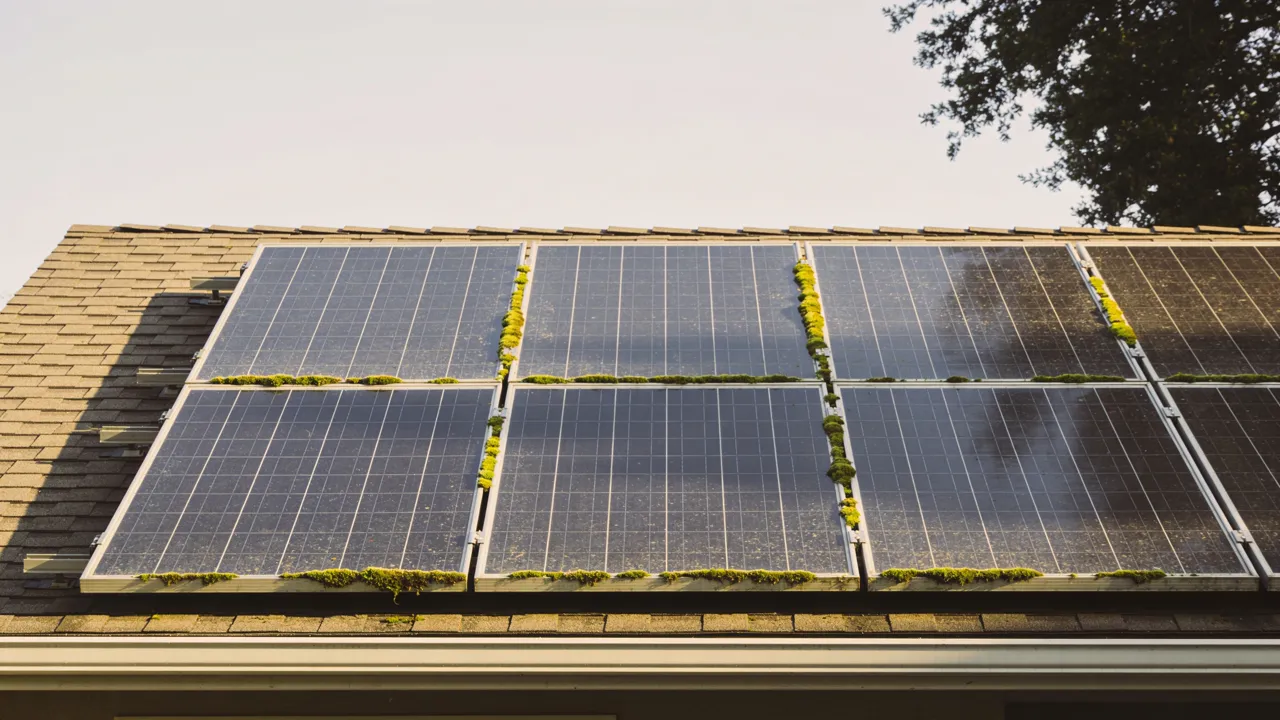
You see a green line below the panels after a wet spell. Before ordering a panel wash, find out which surface holds the growth. That is the difference between a cleaning quote and a roof repair call.
Where is the green material?
Take one photo showing the whole array and another closer view from the ground. Look at the border between glass, metal frame, shingles or tile, and gutter. Material at a frame edge can appear to be on the glass from a distance. Do not scrape the edge or pry under a panel to identify it. If the roof is leaking or a tile is displaced, start with a roofer or the installer.
Shade and moisture make green growth more likely on a roof. Have a cleaner look at the actual surface before choosing a treatment. Photos also help the crew decide whether the panel can be reached without disturbing roofing or wiring.
Will rain remove it?
Rain can clear loose material while leaving adhered buildup in sheltered areas. NREL's research on pollen at southeastern solar sites found that rain does not always restore a soiled array. Check what remains after a local rain before you book a cleaning.
What is safe to put on a panel?
Start with the cleaning section for the exact module model. It may specify water, tools, temperature, and chemicals. High pressure, scraping, abrasive pads, and a roof wash product selected for shingles are poor choices to improvise on panel glass and connectors. Total Solar Cleaning uses deionized water and soft tools when they fit the module instructions.
Our soft-wash and pressure-wash comparison explains what to ask a cleaner. The warranty guide explains why the maker's document matters more than a generic assurance. If a surface is damaged, ask the installer to evaluate it before anyone washes over it.
Who should handle the nearby roof?
Cleaning panel glass will not repair a gutter, underlayment, flashing, or roof leak. If green material continues under the array or along a roof seam, a roofer or installer may need access that a panel cleaner does not provide. Describe any water inside the building, loose mounting, or electrical alert separately. These details can change the sequence of work.
If the green material is on a shaded roof next to the array, ask the roofer whether clearing that growth changes access to the panels. A cleaner should not wash an area that the roofer needs to inspect first. Keep separate photos of the roof edge and the glass. That makes it easier to compare the condition after each trade finishes its work.
How to request the right scope
Send the address, number of stories, approximate panel count, and the location of the green material. Mention that array and roof photos are available for follow-up. Say whether you have noticed a leak or inverter message. A photo after rain can show what stayed put. Total Solar Cleaning can assess cleaning of reachable panel surfaces; the roofer or installer addresses structural and electrical issues. Use the contact form or call (833) 444-4173.